
Mystery Dumpling Blind Box
Fun Galaxy MediaRole Playing
3.714.00 Reviews
- Version
- 1.0.5
- Installs
- 500.00K
- Age Rating
- Everyone
Screenshots
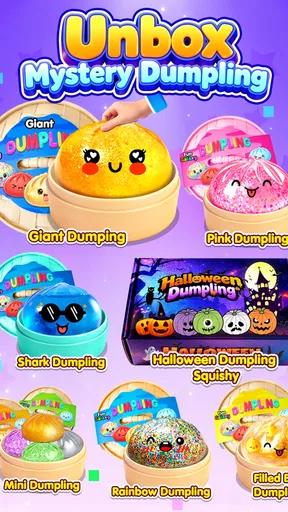
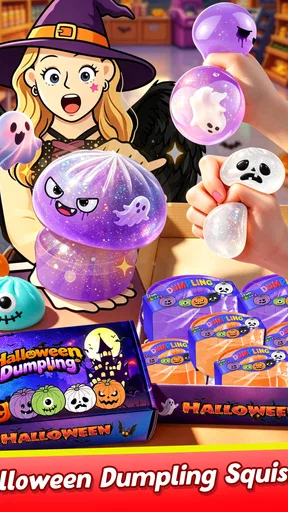
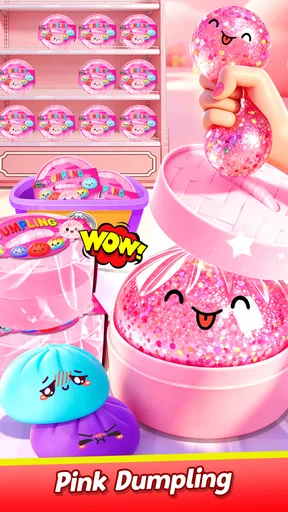





Our Review of Mystery Dumpling Blind Box
 Analysis by Appyee
I approached Mystery Dumpling Blind Box as a small, casual role-playing game rather than a deep adventure. Its central idea is easy to understand: open a viral mystery dumpling squishy and see whether the surprise inside is an ordinary collectible or the rare glitter dumpling. That simple hook gives the game an immediate, low-pressure appeal, especially for players who enjoy surprise toys, cute objects, and short sessions.
My overall impression is mixed but fairly positive for the right audience. The game is free, rated for Everyone, and developed by Fun Galaxy Media. It has reached over 500 thousand installs and holds a 3.7 average from around 421 ratings, which suggests that players are interested in the concept but that the experience will not satisfy everyone equally. I would recommend trying it if you want a gentle collecting game with a playful mystery at its center. I would not choose it as a replacement for a story-rich role-playing game or a title built around complex strategy.
How the game feels to use in everyday play
I focus here on how the simple reveal loop fits into ordinary play, especially when you have only a few minutes and want an activity that is easy to pick up and put down. I’ll also consider how setting a stopping point can keep the hunt enjoyable rather than turning it into a grind.
Readable presentation and straightforward navigation
The strongest part of the concept is that the objective is immediately clear. You are not asked to learn a large world, memorize a complicated control system, or follow a long opening explanation before the main idea makes sense. The dumpling is the focus, and the possibility of finding the glitter version gives each opening a small moment of anticipation.
That clarity matters for younger players and for anyone who prefers games with a low learning curve. I can imagine handing the device to a child and explaining the basic goal in a few words. It also works well when I only have a short break, because the premise does not demand that I remember a large amount of story or return to a complicated quest chain.
At the same time, a simple premise places more pressure on the interface. When a game has only a few central actions, those actions need to be especially easy to recognize. A player should be able to tell where to begin, what can be opened, and what happens after a discovery without having to explore several unclear screens. For this type of blind-box game, readable labels and obvious visual separation are not minor details; they determine whether the surprise feels exciting or confusing.
I found the best way to approach the game is to treat each session as a quick check-in rather than expecting a large menu of activities. That mindset makes the compact design feel intentional. If you expect a full role-playing interface with character builds, equipment management, and branching missions, the experience can feel thin. If you want a focused collectible loop, the directness is more appropriate.
Motor demands and the sensory side of the surprise
The dumpling theme gives the game a soft, toy-like identity, but a cute presentation is not automatically comfortable for every player. Surprise effects, bright visual emphasis, or repeated opening actions can be enjoyable for some people and tiring for others. Players who are sensitive to sudden animation, strong contrast, or busy reward moments may want to test the game briefly and decide whether its presentation feels comfortable.
From a motor perspective, this kind of interaction is most suitable for players who are comfortable with ordinary touch controls and short repeated actions. The main appeal comes from opening and discovering, so the physical interaction should feel manageable rather than demanding. However, repeated tapping can become tiring if someone has limited dexterity, hand pain, tremors, or difficulty maintaining precise contact with a small target.
A useful personal strategy is to play in short bursts instead of trying to continue until a particular result appears. This reduces repetitive movement and also keeps the mystery from becoming a chore. I would avoid treating the rare glitter dumpling as a task that must be completed in one sitting. The game is more pleasant when the player can stop after a few openings without feeling that progress has been wasted.
The surprise itself can also affect different players in different ways. Some people enjoy the anticipation of not knowing what will appear. Others prefer predictable rewards and may find repeated ordinary results disappointing. That is an important trade-off here: the uncertainty is the point of the game, but it is also the reason the experience may not suit someone who wants reliable progress every time they play.
Using it around family, school, and low-energy moments
This is the sort of game I would use during a short waiting period, while relaxing at home, or as a light activity shared with a child. Because the premise is easy to explain, it can work as a conversation starter: one person opens a box, another guesses what might appear, and the discovery becomes the activity. That makes it more socially approachable than a game that requires everyone to understand a long plot or a detailed ruleset.
It may also suit players who are new to role-playing games. The category can sound more demanding than the actual experience, but the mystery-dumpling format provides a gentle entry point. Someone who is uncomfortable with combat, complicated maps, or time-sensitive missions may appreciate having a smaller objective that does not appear to require expert gaming knowledge.
In a realistic everyday situation, I could see using it during a ten-minute break after work. I would open the game, interact with a few dumplings, and close it without needing to set aside an entire evening. That is a genuine strength. The same quality becomes a weakness if you are looking for a game that occupies a commute with a substantial narrative or gives you a long-term project to manage.
For shared use, I would still keep expectations clear with younger players. The word “rare” can make a collectible feel like something that must be obtained immediately. I would present the glitter dumpling as a pleasant possibility rather than a goal that justifies endless attempts. That approach keeps the activity playful and avoids turning a casual game into a source of frustration.
Where it sits beside familiar role-playing alternatives
Compared with traditional role-playing games, this one is much lighter. A conventional role-playing title usually gives me a larger sense of progression through exploration, dialogue, combat, character choices, or equipment. Mystery Dumpling Blind Box focuses instead on the small emotional beat of opening something unknown. It is closer to a digital surprise collectible experience with role-playing flavor than to an expansive quest game.
That distinction helps explain who should install it. If you like collecting cute items and enjoy the reveal more than the journey, the format may feel charming. If your favorite part of role-playing games is building a powerful character, making meaningful decisions, or uncovering a detailed setting, another option will almost certainly offer more depth.
It also differs from a standard puzzle game. A puzzle normally rewards careful reasoning and gives the player a clear route toward a solution. Here, the attraction is anticipation and discovery rather than solving a difficult problem. Players who want to test their logic may find the loop too passive, while players who want a relaxing surprise may find that absence of pressure refreshing.
The free price lowers the barrier to trying it, which is useful when you are unsure whether the blind-box idea will hold your attention. I would still judge it by how much enjoyment you get from the opening loop, not by the size of the download or the novelty of the theme. Free access makes experimentation easy, but it does not turn a narrow concept into a broad game.
Practical tips for getting more from the limited format
My first tip is to decide what kind of session you want before opening the game. If you need a calm distraction, set a small stopping point and enjoy the reveal. If you are chasing the glitter dumpling, recognize that the search may feel repetitive because the rare result is the exception rather than the normal outcome. Keeping those two goals separate makes the game easier to evaluate honestly.
My second tip is to use the game as a shared guessing activity rather than assuming it must be played alone. The mystery works well when another person reacts to the reveal, particularly a child or a friend who enjoys novelty. This gives the simple loop a social layer without requiring a multiplayer system or a complicated explanation.
My third tip is to pay attention to comfort during the first few sessions. Notice whether the text is easy to follow, whether the visual effects feel tiring, and whether the repeated touch actions are comfortable for your hands. If the game is being used by a child, observe whether the excitement remains playful or turns into pressure around finding the rare item. These checks are more useful than judging the game only by its cute appearance.
Another practical approach is to avoid comparing every opening with the glitter result. The rare collectible is a motivating idea, but making it the only satisfying outcome can make ordinary discoveries feel pointless. I get more value from the game when I treat each reveal as a small event and the glitter dumpling as an occasional bonus rather than the sole reason to return.
Remaining barriers and reasons to skip it
The biggest limitation is repetition. A focused mystery-box loop can be appealing at first, but its long-term value depends heavily on how much the player enjoys repeating the same basic type of discovery. There is less room for strategic mastery than in a deeper role-playing game, and there may be little reason to continue once the novelty has worn off for a particular player.
The rare-item focus is another possible barrier. Players who dislike chance-based collecting may feel that their enjoyment depends too much on an outcome they cannot control. Even without treating the game as a serious competition, the search for a special result can create a sense of unfinished business. I would skip it if random discovery usually makes you impatient rather than curious.
Accessibility also needs to be judged personally. The Everyone age rating makes the premise broadly approachable, but an age label does not tell me whether every visual, touch, and sensory aspect will suit every player. Someone with limited fine-motor control, sensitivity to animated effects, reading difficulties, or a need for highly predictable interaction should try a short session and check the experience against their own needs.
I would also skip it if you need a substantial offline-style role-playing experience, a strong narrative, or a clear sense of character growth. The game’s appeal is concentrated in the surprise object. That is enough for a quick casual title, but not enough for players who want a world to explore or a campaign to complete.
Device details and who should give it a chance
The game is currently at version 1.0.5 and runs on Android 7.0 or later, so owners of older supported Android devices may be able to try it without needing a recent phone. I would still pay attention to how comfortably the screen can be read and touched on a smaller device, since a compact display can make any repeated interaction less comfortable for some users.
Fun Galaxy Media has positioned the game around a very accessible idea: open, discover, and see whether the unusual glitter dumpling appears. Its Everyone rating makes it a reasonable candidate for family-friendly testing, but I would still supervise younger players if they become overly focused on the rare result. The game is best treated as a light amusement, not as a promise that every session will deliver a special collectible.
The audience I would recommend most strongly is someone who likes cute digital collectibles, enjoys harmless surprise mechanics, and wants a game that can be understood quickly. It is also a reasonable first step for a player who finds larger role-playing games intimidating. The audience I would steer elsewhere is anyone seeking tactical depth, a long story, or a predictable reward path.
My inclusive verdict after spending time with it
Mystery Dumpling Blind Box succeeds when I let it remain small. Its appeal is not complexity; it is the brief pause before a dumpling opens and the possibility that the next reveal will be unusual. That makes it easy to introduce, suitable for short sessions, and potentially enjoyable in a family setting.
Its limits are just as clear. Repetition can reduce its staying power, random discovery will not suit every temperament, and the cute sensory presentation may need personal testing for players with specific comfort requirements. The game does not become a full role-playing adventure simply because it uses that category. It is a focused surprise-collecting experience, and it should be judged on that basis.
For me, the fairest recommendation is conditional: try it if you want a free, gentle mystery activity and are happy to enjoy the process rather than demand a rare result. Take breaks, use short sessions, and consider sharing the reveals with someone else. The best reason to play is the small moment of curiosity, not the pressure to complete a collection. With that expectation, it can be a pleasant diversion; without it, a deeper role-playing game or a skill-based puzzle title will probably be a better match.
Verdict
Strengths of Mystery Dumpling Blind Box
- Fun blind-box format makes each dumpling reveal exciting.
- Simple controls are easy to learn during short play sessions.
- Cute visual design gives the game a lighthearted, relaxing feel.
- Collecting different dumplings adds a satisfying completion goal.
- Suitable for casual play without requiring advanced gaming skills.
Limitations of Mystery Dumpling Blind Box
- Randomized rewards may feel frustrating when chasing specific dumplings.
- Limited challenge could become repetitive after extended play.
- Some content may be locked behind ads or optional purchases.
- Progress can feel slow if rare items appear infrequently.
- The small gameplay scope may not appeal to players seeking depth.
Similar Picks in This Category
View All
Hair Dye
CrazyLabs LTD4.4

Monster High™ Beauty Salon
CrazyLabs LTD4.5

Bus Simulator - Bus Games 3D
Jima Apps4.4

Flight Pilot: 3D Simulator
Wildlife Studios4.1


Super Stylist Fashion Makeover
CrazyLabs LTD4.4
Frequently Asked Questions
What is Mystery Dumpling Blind Box?
Mystery Dumpling Blind Box is a casual collection-style game centered on opening virtual blind boxes and discovering surprise dumpling characters or themed items. Each opening is designed around suspense and collection progress, making it appealing to players who enjoy randomized rewards, cute visuals, and short play sessions. The experience is generally simple to understand, although the exact contents and available features may change with updates.
Is Mystery Dumpling Blind Box free to download and play?
The application may be available to download for free, but users should check the store listing carefully because optional purchases, advertisements, or other monetization features can be included. Blind-box mechanics may also encourage repeated openings, so it is sensible to review the in-app purchase information before playing. Parents should check device payment settings if children will be using the app.
Does Mystery Dumpling Blind Box require an internet connection?
An internet connection may be needed for downloading the game, loading advertisements, synchronizing progress, receiving new content, or processing optional purchases. Some basic parts of the experience might work offline, but this should not be assumed because functionality can vary by version and device. If you plan to play while traveling, test the app without a connection before relying on offline access.
Is Mystery Dumpling Blind Box suitable for children?
The colorful presentation and straightforward collection gameplay may be suitable for younger players, but families should review the official age rating and privacy information before installation. Because blind-box systems use randomized rewards and may include advertisements or optional purchases, parental supervision is recommended. Adults should also confirm whether the game collects usage data or permits external links and online interactions.
What should I check before downloading Mystery Dumpling Blind Box?
Before downloading, verify that your Android or iOS device meets the required operating-system version and has enough free storage. Read the current store description, permissions, privacy policy, age rating, and recent user reviews, since features can change after updates. It is also worth confirming whether progress is backed up, whether advertisements are present, and whether purchases can be restricted.
Play our best games!


